
Wedding Photography

Wedding Photography

Etiquette, styles, key shots, and editing techniques specific to weddings...

Bo and Adriene

Engagement Photography

How to shoot engagement or couple photos that catch feeling and emotion.

Best of the Best

Portfolio

How to make a portfolio, and what to put in it...

HDR

HDR and Advanced Techniques

Learn advanced photo techniques like HDR and editing tricks!

Choose 2!

The Business

Marketing and advice about the business side of photography

Showing posts with label styles. Show all posts

Monday, June 1, 2009

How To Be A Good Subject of A Photo Shoot

Posted On 6/01/2009 01:07:00 PM by suctionhorse 0 comments

What are some things that your subjects have done or worn that have made you cringe?

Yesterday I had the chance to have the tables turned on me as I posed with my beautiful fiance for our new engagement photos that our photographer Shannon (of Shannon Ludlum Photography) shot. She had some great ideas and I'm sure that they will come out great, but I was having a hard time making myself not think about framing and focus and location details, but she did a great job of putting us at ease and having fun so she could get some great photos for us.

As a portrait and wedding photographer you WILL run into bad colors / clothing or just general ignorance on the part of your client, so I'm going to help you prepare for how to deal with unruly clothing or behavior from your subject and if you are ever the subject you can more easily show or tell your subjects how to BEHAVE . First I'll give you what you should do as a photographer and then what to expect if you are the subject.

The behavior isn't on purpose

... so don't blame the subject. If anything, blame yourself for not telling your client about these rules before hand. Most wedding couples or solo portraits have not had much camera face time if any at all, so be prepared to give detailed instructions or have a good "beside manner" (as if you were a doctor) and keep your subjects smiling, laughing and in a good mood in general.

If you are the subject: remember that you are not expected to read the photographer's mind or be a professional model, just take direction and don't be stubborn. Your photographer knows how to make you look good and is putting you and posing you in the best way to make sure you stay that way.

Put your subject at ease

This is a tricky technique and is easier for some photographers than others. Basically you chit chat with them and develop a rapport with them. Make jokes (have some jokes pre-planned) get them to be playful with each other. This includes tickles and neck kisses ;-)

If you are the subject: don't be nervous. Be yourself and just have fun. Breathe. Stop worrying how the pictures will come out and let your photographer do their job.

What not to wear

You may have seen a book or TV show about this. As a photographer you know that there are certain colors and styles of clothing that look horrible in photographs. Be sure to let your clients know ahead of time "what not to wear" to their photo shoot. Don't assume that they've read up on it. So here are some colors that are not so great on film:
  • Bright Red (or any red) - red bleeds on film. Digital sensors handle it a little better but its usually too much contrast for the human eye and your eye bleeds the color in your brain. STAY AWAY!
  • Bright or fluorescent yellows, lime greens, etc. - The 80's called... they want their clothes back
  • Pure White - white is a great contrasting color but most digital meters have a hard time reading the correct exposure and thus under or over exposes the white making it blow out and losing the detail of any folds or patterns in the material. Tell your clients to stay away from pure white unless you plan on doing some time consuming hand metering every other shot.
  • Large stripes, bold designs, polka dots - while not a problem for sensors, stripes and polka dots either make people look fatter than normal or skinnier than normal. It is also distracting to the viewer, where you want the focus to be on the face of your subject, not the beer gut.
  • Funny print shirts - or any interesting artistic designs. Tell them leave their hilarious Borat t-shirt at home. Because that's all that a viewer will notice and laugh at when looking at the picture
  • Trendy / Hot /Goofy designs - tell your clients to keep it more traditional and subdued. Not that they shouldn't wear something striking or vibrant, but they need wear something that won't distract from their faces and eyes.
  • Short sleeves / tank tops / shorts - if you're not a professional model with a perfect body, stay with pants/jeans and slightly loose fitting short or long sleeve shirts/tops. Lots of skin flopping around isn't attractive.
Basically some great colors would be:
  • medium to dark greens
  • purples
  • khaki
  • blues
  • browns
  • black
  • creme whites
I'm not going to pretend to know everything about women's fashion (maybe some of the ladies could share some good options for clothing in the comments section?) but I'll give some advice for guy's clothing.
  • Blue Jeans: good fitting but not too loose or too tight (no skinny jeans)
  • Black button down shirts, long sleeve
  • Nice plain polo (no logos) in the above colors (if you have decent looking arms)
  • Casual but modern suit coat (not buttoned)
DO NOT wear:
  • "Urban Wear" - sagging, big print shirts, poorly made clothes
  • Camouflage - if you are a real soldier, wear your dress uniform for pics.
  • weird ties - bolos, Sponge Bob, Tabasco
  • popped collar polos or layered polos - save that for the frat party
The final details that most people don't think about till the last minute are:
  • Hair - bring some hair gel or hairspray and a comb or brush with you to the shoot.
  • Makeup - obviously for the ladies but some concealer (for blemishes or zits) or translucent powder will do wonders for the guys as well. The powder keeps the shine off your face and forehead. (just ask your wife/girlfriend to borrow some). Its done in Hollywood and on TV all the time guys, don't get too weird about this.
So, remind (or even print out this handy list for) your clients before their photo shoot and you'll have a great time and everyone will look hot!


Friday, April 24, 2009

Networking With Other Wedding Freelancers

Posted On 4/24/2009 02:41:00 PM by suctionhorse 0 comments

A big part of getting new business when you are first starting out as a wedding photographer, or really any freelance business person, is to network with other freelancers in your circle of influence. The easiest way to do this is to talk to the other "work" at the next wedding you shoot and be sure to have some business cards on hand to pass out (don't be stingy!). Some good candidates for wedding networking are going to be freelancers or businesses that you can "trade out" services for:

  • Cake makers / bakers - These guys/gals need you! They need professional photos of their cakes and baked goodies for their portfolios. Offer to take some free high resolution, well lit shots of their next wedding cake for free as an incentive for their good word to the next bride or MOB/FOB about how AMAZING your wedding photography is. This is a win-win because you can use these shots for your portfolio as well as getting some great word of mouth recommendations.
  • Caterers - same as cake people, caterers have portfolios that usually look like crap and would love to have some pro photos done of their "spreads".
  • Flower Shops / Arrangers - these people work with their bride's artistic and creative side and will be willing to suggest you if your style is compatible with the bride's flower and color scheme.
  • Wedding planners - getting in with a few high profile wedding planners is HUGE. You will always be booked up, because these people make all the important decisions for the wedding that the parents or couple don't want to make. The wedding planner will have a huge influence on these type of weddings and if you're really that good, the planner will always suggest you. Examples of trade-outs with a planner can be things like professional head shots for their public image and wide shots of the final put together reception hall or auditorium for their portfolios.
  • Musicians - do a few artsy shots of the band next time and forward them on to the leader with a hopeful note that they would recommend you or link to your pictures on the band's website.
  • Officiants / Pastors - Don't ever tick off a pastor. Do the opposite. Make sure the pastor's wishes are followed to the T and if you have time offer to do a free head shot or two and some great look exterior shots of the church for the church's website with a nicely worded request for a link to you. The trick is to get your name floating around and be the first choice in the pastor's head when he thinks of "photographer".
Anytime you talk with another wedding business person or freelancer, hand them at least 2 business cards and tell them to feel free to pass the others along to potential clients. Soon you'll have clients calling like crazy to meet with you. Put your name out whenever and wherever you can!


Wednesday, February 18, 2009

Traditional vs. Photojournalistic Wedding Photography

Posted On 2/18/2009 11:38:00 AM by suctionhorse 0 comments

old wedding photo
The profession of wedding photography has evolved over the years from a simple one or two shot posed portrait (photo by Erica_Marshall) into what it is today, where the bride has almost endless options of how, who and what she wants photographed on her wedding day and the line is being blurred between "traditional" type wedding photography and a more photo journalistic approach to the wedding day. Here are some characteristics of each:

  • Traditional Wedding Photography - is more portrait based. Scenes and shots are usually set up in advance during, before or after the wedding. The subjects are posed using tried and true / pleasing to the eye arrangements.
  • Photojournalistic Wedding Photography - is more candid and photos are captured spontaneously to show once in a lifetime moments and emotion. Much like photojournalists for the media, wedding photojournalists present a story through the use of photographs.
Advantages of Traditional vs. Photojournalistic Wedding Photography
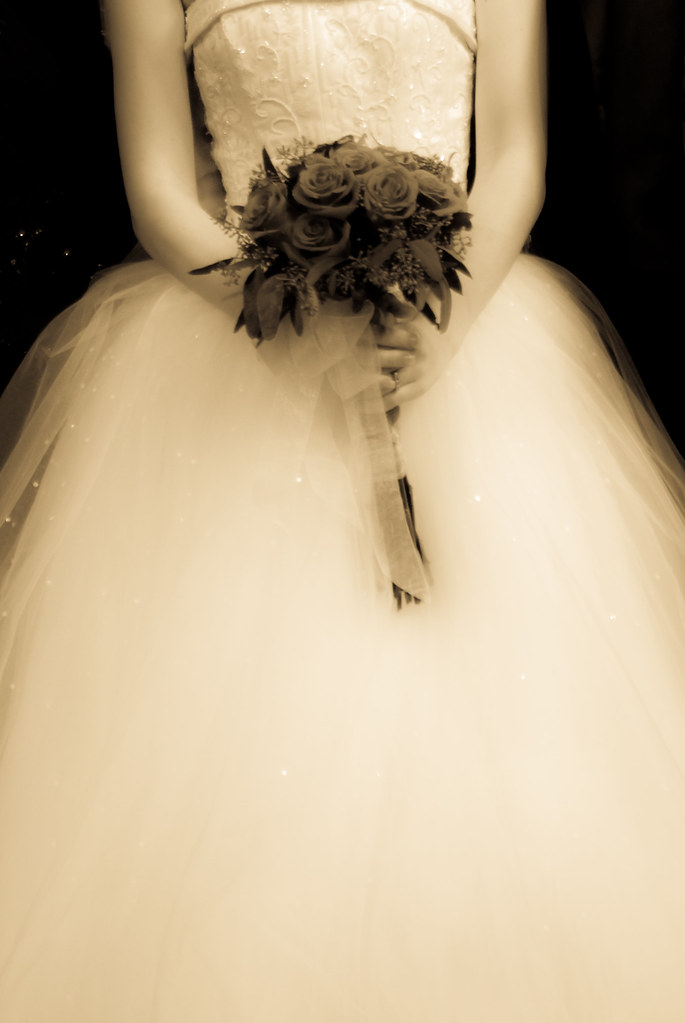
  • wedding dressTraditional Wedding Photography creates more classic and commercial / frameable type photos that a wider range of people will enjoy (ie. close ups on faces, family portraits, well framed staged events like the cake cutting).
  • Photojournalistic Wedding Photography creates more of a reality capture and true feel of the day as the photographer stays out of the way and shows details that would usually be missed. He also captures the action as it happens on the spot, bringing the emotion and fun of the day to light. While these pictures may not be classically framed or lit, they are always very artistic and bring back memories for the couple.
Most brides these days want a combination of the two styles so they can get traditional family pictures for their relatives AND have some great artistic shots for themselves.

Another evolving type of wedding photography is the Fashion Style wedding photography. This is a combination of both traditional and photojournalistic where the photographer creates pictures that look like they are inspired by editorial fashion photography as would be found in magazines like Vogue or Vanity Fair. This type is usually more involved and more expensive since the couple usually have to go to different locations either before or after the wedding with the photographer and have shots done with studio style lighting, fashion posing and professional makeup and hair.

An easy alternative to a fashion wedding shoot is another interesting trend called Trash The Dress. This involves a post wedding photo shoot where the couple dress up formally and go to grungy locations for a contemporary fashion shoot. Some also jump in the water with their dresses or explore caves and forests. These can be done with studio gear but available light (because the shoot is outside) makes these look great. Convince your bride (and MOB) to do a Trash The Dress and you'll both have a blast and some great looking pictures!


Creative Commons License


Tuesday, January 20, 2009

Eat or starve at your wedding shoot?

Posted On 1/20/2009 12:32:00 AM by suctionhorse 0 comments

So, I came across this conundrum while I was shooting the Holloway wedding Saturday (some of you may have seen some of their engagement pics below and on my Flickr site)...

Should you eat during a wedding shoot?

For the past few weddings I've done, I've just gone hungry or have eaten something before hand, because I was just to shy or embarrassed to ask if it was ok and then most of the MOBs or FOBs have volunteered to get me a to-go box or something. So, I decided to do a little research and see what other wedding photogs do. Here are some of the options I found:
  • If its a short wedding, (4-6 hours) just eat before hand or bring a granola bar or energy drink with you. Some hosts will let you eat off the buffet anyways. Be sure to ask.
  • Ask the bride or MOB during your initial meeting if the wedding will be longer than 6 hours and if so, ask or have a question on your contract about whether a meal will be provided or you can take a short break to eat something off the buffet in the back kitchen.
  • If not, ask to have a short 15 minute break while everyone else is eating to eat yourself.
  • If its really important to you, or you start feeling woozy if you don't have a regular meal, put it as a stipulation in your contract that you MUST have one of the above options.
  • Explain to your hosts during the initial meeting that if they provide you a small table to eat at, you will be able to keep an eye on the wedding to make sure they aren't missing anything. If you simply leave for an hour to get something to eat, you might miss coverage of something important during your reception.
For the record, the MOB on Saturday was very generous and let me have my pick of all the buffet in a big to-go box for the road and I wasn't really starving because it was a fairly short wedding (4 hours). So, this post in no way was any fault of the Latta or Holloway family, it was just something that we forgot to discuss ahead of time.

So, that's one thing I learned this time around. What are some of you guy's experience with eating during your shoot? Did they let you? Was it discussed ahead of time? Please leave me a comment.

©Creative Commons 2009