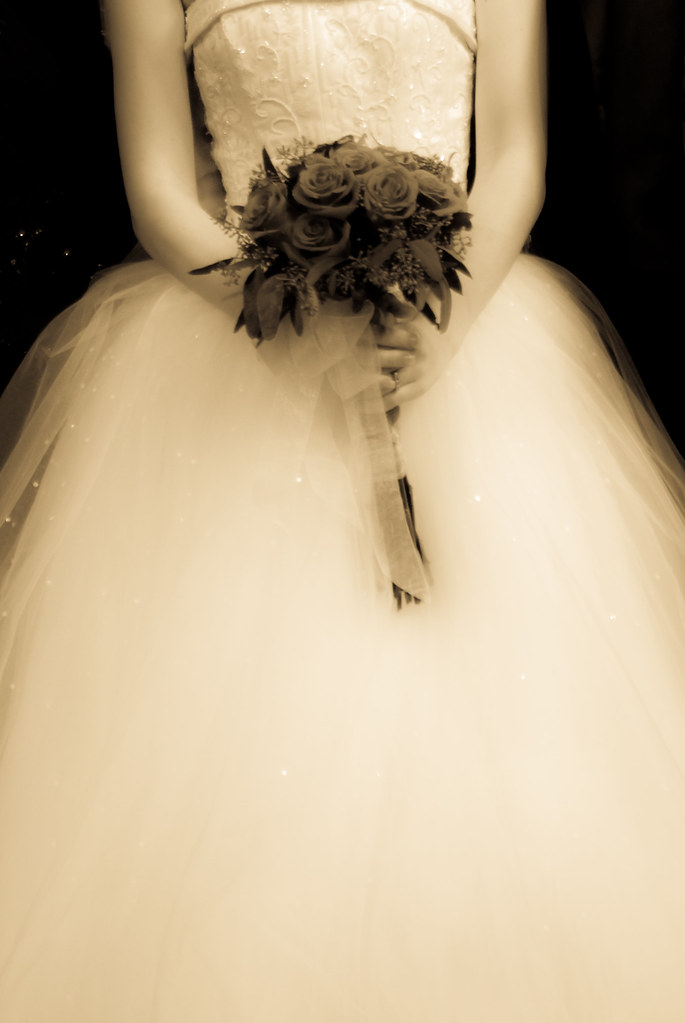
Wedding Photography

Wedding Photography

Etiquette, styles, key shots, and editing techniques specific to weddings...

Bo and Adriene

Engagement Photography

How to shoot engagement or couple photos that catch feeling and emotion.

Best of the Best

Portfolio

How to make a portfolio, and what to put in it...

HDR

HDR and Advanced Techniques

Learn advanced photo techniques like HDR and editing tricks!

Choose 2!

The Business

Marketing and advice about the business side of photography

Monday, March 23, 2009

Please Take A Brochure

Posted On 3/23/2009 03:16:00 PM by suctionhorse 0 comments

Another piece of the marketing puzzle for your wedding photography business should be a professional looking brochure. A brochure will help those clients that maybe don't have access to your online portfolio or older clients (MOBs and FOBs) who may see a brochure as an indication that you are an established photographer with a marketing plan behind you.

Basically a brochure is a glorified business card, but it can be so much more:
  • a mini portfolio
  • mission statement / who you are
  • services you provide
  • the who, why, how of your services
  • a call to action
  • provide helpful hints
A call to action is one of the most important things to include in your brochure. A call to action is a statement that nudges your potential clients to become actual clients. For example:

Call or email me today to meet with me and see my portfolio!

Take a few minutes to complete and send in this questionnaire about your preferences and we'll send you a coupon for 20% off!

Send $5.00 to start your trial of my new marketing plan! Cancel anytime!

Offering incentives (like the second CTA) can often prompt "fence sitters" by creating something of value they can get for free.

Your brochure doesn't have to be just a standard tri-fold layout. It can be any shape or size. Be creative! The more creative you are, the more your brochure will stand out!

I create my own brochures but there are many online retailers and local print shops that will make them for you very cheaply.

Steps to making your own brochure:
  1. read up and be familiar with basic graphic design for brochures
  2. use a good graphic design program like Adobe Photoshop or Illustrator.
  3. use a template to make sure your measurements are correct as to where to the folds go
  4. include your business' name on the front flap and whenever possible on the inside
  5. include a "mission statement" or a description of your services to your potential clients
  6. don't get too cluttered or busy (see #1)
  7. remember you have to design the inside and outside. They are both opposite each other.
  8. take to Kinkos or other photocopy store and get them to do one double-sided test print to make sure both sides will match up.
  9. when everything is perfect print out a good 50-100 so you won't have to go through all this hassle again later
  10. crop and chop if needed, then carefully fold at your fold lines
  11. hand them out and watch people get impressed!
So, please... make a brochure!

(graphic by Seattle Municipal Archives from Flickr)


Friday, March 13, 2009

Today's "What The Duck?"

Posted On 3/13/2009 11:01:00 AM by suctionhorse 0 comments

I always love this guy's comics. Please check him out and subscribe to this comic strip if you're interested in photography!

I'm working on a few new articles for TheWedding PhotogBlog in the next couple of days so stay tuned. I hope a little WTD helps fill the void for now. Thanks for staying tuned!


Thursday, March 5, 2009

Essential Adobe Software Updates Today!

Posted On 3/05/2009 11:18:00 PM by suctionhorse 0 comments

I just heard that today Adobe has released updates for Lightroom, CS4 and their Camera RAW plug-in. If you are using any of these amazing editing programs for your photography, go right now and update these at the Adobe Website!

WHAT?!? You're not using Adobe software?
Adobe has been making the premier photo editing software for over 10 years now. Professionals across the industry use Adobe's suite of software for the media and design industry:

  • Photoshop CS4 and Illustrator CS4 for graphic design
  • Dreamweaver, Flash and Acrobat for web design and online media
  • Premier Pro and Aftereffects for video and special effects
  • Lightroom for specialty photography effects and fine tuning as well as editing and archiving.

Yes, most of these are a bit pricey (up to $2499 for most recent Creative Suite 4 Master Collection) but a few of these are definitely worth saving up for, especially Lightroom 2 if you are a wedding photographer. Your clients will thank you! Lightroom 2 is retailing for just under $300 for the full version right now and I would suggest buying this before you buy another single piece of gear. Good photo editing will make or break your business!

Budget conscious photo editing alternatives:
For those of you who can't afford to make the investment right now, you should at least look into Adobe's value versions of their most popular software usually retailing for under $100. The two titles worth looking into are Adobe Photoshop Elements 7 (graphic design and photo editing) and Premier Elements (for video editing). Both provide all of the essential Photoshop or Premier tools without all the complicated steep learning curve and obscure features that some say you need but will never use.

A few non Adobe alternatives that I would recommend are:
  • Gimp - Gimp is one of the most popular and powerful open source (free!) graphics and photo editing software out there for a few years now. Some even argue that it rivals many of Photoshop (full version) features.
  • Paint.net - innovative user interface with support for layers, unlimited undo, special effects, and a wide variety of useful and powerful tools. An active and growing online community provides friendly help, tutorials, and plug ins.
  • Corel Paint Shop Pro X - retouch, Camera RAW support, color changer, noise removal
Most of these are less than $80 or FREE! So there's no excuse anymore. Get one of these programs and learn it. Having good photo editing software and knowing how to use it puts your photography well above "uncle Jim's" who's pictures are not well framed, red eyed and over exposed. You have the power to fix all of these little problems if you have a good photo editor.

Next time: Free online photo editors for working on you photos "in the cloud".

Creative Commons License


Thursday, February 26, 2009

Do You Have A Business Card?

Posted On 2/26/2009 12:18:00 AM by suctionhorse 1 comments

I just got my new business cards in from VistaPrint the other day so I thought I would share a few secrets with you all about business card design and use.

Why have a business card? Everybody knows who I am and I can just give them my email or phone number if they ask...

What's wrong with this statement? This person is expecting clients to flock to him like a rock star and start begging him for his email or number like crazed teen girls. Unrealistic. People won't flock to you, especially when you are first starting out. You need to flock to THEM! That means network. Talk about your business every chance you get and then pass out a business card.

Business cards are the first investment you will make with your advertising budget. This is the first introduction that people will have to your work and talent. You will be giving these out to everyone you talk to even if they are not interested in your wedding photography. Then you can spark up a word or two about your business when you hand it to them.

Essential elements of a successful business card:
  • Complete contact information - this includes: Name, title, name of business (if any), address, at least one phone number, email, and website. If there is room put a 3-4 word description of your business under the business name.
  • Portfolio Image - if you're a photographer (and I assume most of you reading this blog are...), you need to have at least one of your best images on the front of your business card. The card is like your mini-portfolio that you are handing out to show people. It also would be ideal if you can find a photo with some negative space to accommodate contact info layout. (My card above is a good example as her dress is considered negative space)
  • Website and email - VERY important in the year 2009! If you are not a techy type, get someone to make you a Facebook or MySpace page and put it here, but try to work toward buying a domain name and creating a simple website with your info and portfolios. The sad truth is that many potential clients won't consider you to be a professional if you don't have a domain name (.com). Read my post The Power of the Domain Name that I recently wrote on The Horse for more info about web domains.
  • Thickness of the card stock (paper) - believe it or not, thicker card stock gives you more credibility. Every aspect of the card links with you and your business, so if your card is on flimsy 8 or 10pt. paper someone might think that your business ethic is flimsy...

If you hand me a flimsy card, with perforated edges, I won't even consider doing business with you.

~ Doran P: a marketing agent and printer by trade.

Introduce yourself everywhere you go with your business card. Get it in the hands of as many people as possible. Hand your card to the receptionist at the doctors office, the hostess at the restaurant, or the technician at the auto repair. These cards may find their way into the hands of a decision maker and they are certainly being put to better use than sitting on your desk at home.

The point is: get some professional looking and feeling business cards made TODAY! And start seeing the results in your advertising.


VistaPrint Free Business Cards


Creative Commons License


Wednesday, February 18, 2009

Traditional vs. Photojournalistic Wedding Photography

Posted On 2/18/2009 11:38:00 AM by suctionhorse 0 comments

old wedding photo
The profession of wedding photography has evolved over the years from a simple one or two shot posed portrait (photo by Erica_Marshall) into what it is today, where the bride has almost endless options of how, who and what she wants photographed on her wedding day and the line is being blurred between "traditional" type wedding photography and a more photo journalistic approach to the wedding day. Here are some characteristics of each:

  • Traditional Wedding Photography - is more portrait based. Scenes and shots are usually set up in advance during, before or after the wedding. The subjects are posed using tried and true / pleasing to the eye arrangements.
  • Photojournalistic Wedding Photography - is more candid and photos are captured spontaneously to show once in a lifetime moments and emotion. Much like photojournalists for the media, wedding photojournalists present a story through the use of photographs.
Advantages of Traditional vs. Photojournalistic Wedding Photography
  • wedding dressTraditional Wedding Photography creates more classic and commercial / frameable type photos that a wider range of people will enjoy (ie. close ups on faces, family portraits, well framed staged events like the cake cutting).
  • Photojournalistic Wedding Photography creates more of a reality capture and true feel of the day as the photographer stays out of the way and shows details that would usually be missed. He also captures the action as it happens on the spot, bringing the emotion and fun of the day to light. While these pictures may not be classically framed or lit, they are always very artistic and bring back memories for the couple.
Most brides these days want a combination of the two styles so they can get traditional family pictures for their relatives AND have some great artistic shots for themselves.

Another evolving type of wedding photography is the Fashion Style wedding photography. This is a combination of both traditional and photojournalistic where the photographer creates pictures that look like they are inspired by editorial fashion photography as would be found in magazines like Vogue or Vanity Fair. This type is usually more involved and more expensive since the couple usually have to go to different locations either before or after the wedding with the photographer and have shots done with studio style lighting, fashion posing and professional makeup and hair.

An easy alternative to a fashion wedding shoot is another interesting trend called Trash The Dress. This involves a post wedding photo shoot where the couple dress up formally and go to grungy locations for a contemporary fashion shoot. Some also jump in the water with their dresses or explore caves and forests. These can be done with studio gear but available light (because the shoot is outside) makes these look great. Convince your bride (and MOB) to do a Trash The Dress and you'll both have a blast and some great looking pictures!


Creative Commons License